Instead of another harsh toilet gel or drain cleaner, more households are quietly turning to ordinary washing‑up liquid as a first line of defence. Used in the right way, that slippery blue or green liquid can loosen stubborn blockages, cut through grime and even help keep limescale at bay.
Why washing‑up liquid works so well in the toilet
Washing‑up liquid is designed to break up fat and food on plates, so it behaves in a very particular way in water. Those same properties are surprisingly useful inside a toilet bowl and the pipes below it.
Washing‑up liquid lowers the water’s surface tension, helping it slide into tiny gaps and wrap around dirt and waste.
That reduction in surface tension lets the water move more freely over porcelain and inside the U‑bend. It clings less to the surface and more to the grime, which helps loosen:
- greasy residues from body oils and cosmetics
- organic waste that has started to dry and harden
- paper that has bunched up instead of breaking apart
Most washing‑up liquids also contain mild surfactants and a small amount of solvent. Those ingredients lift particles off the surface and keep them suspended in water so they can be flushed away instead of re‑sticking to the bowl.
The “evening drop” habit that keeps the bowl cleaner
One low‑effort routine is starting to circulate on home‑care forums. It involves little more than a squeeze bottle and a bit of patience.
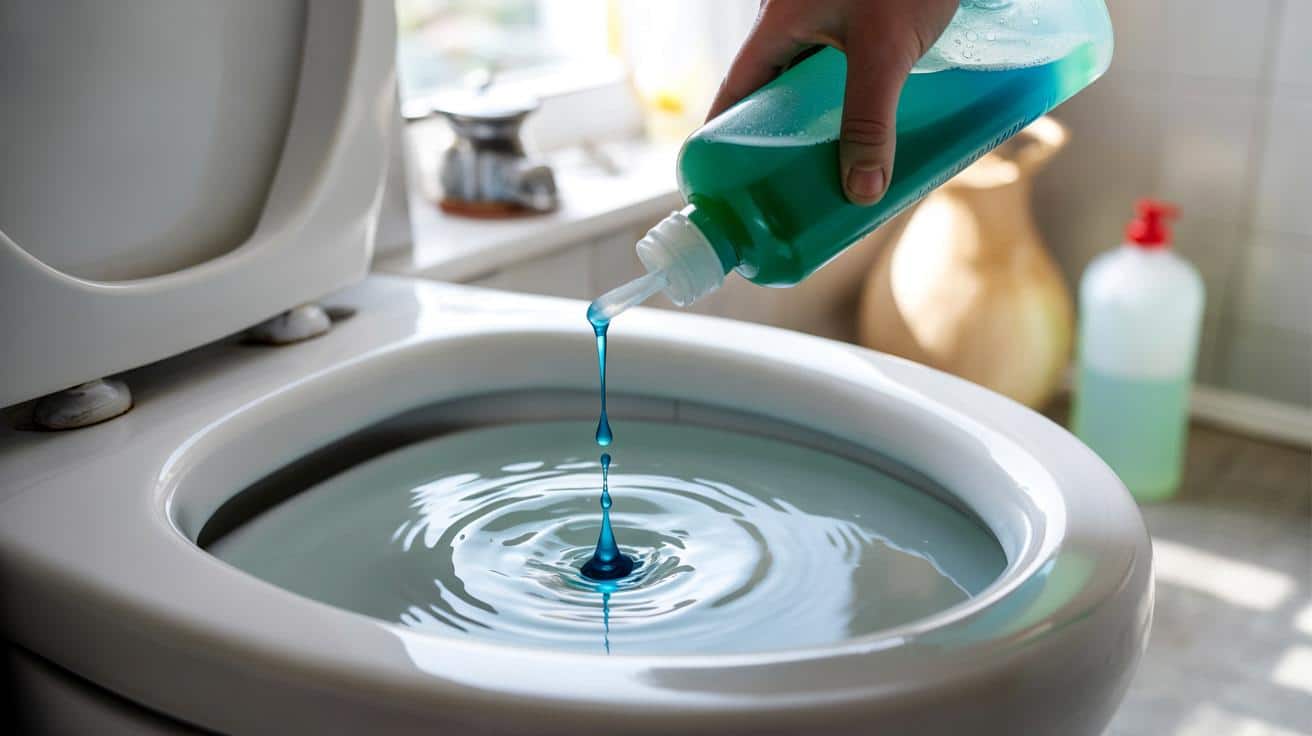
Before going to bed, squirt a small line of washing‑up liquid around the inside rim of the toilet bowl. The liquid slowly slides down the sides, leaving a thin, slippery film over the porcelain and the standing water.
Left overnight, the detergent has hours to soften rings, stains and residue that normal flushing never quite removes.
In the morning, pour in a kettle of hot (not boiling) water from waist height and then flush as usual. The combination of heat, extra water pressure and the already‑loosened dirt often clears away marks without any scrubbing brush at all.
➡️ Beware black ice: 9 smart ways to avoid winter slips on snow and ice
➡️ Buried under 2 km of Antarctic ice, scientists discover a lost world 34 million years old
➡️ Hair professionals say this cut is perfect for hair that gets flat by midday
Step‑by‑step: using washing‑up liquid for minor clogs
For slow‑draining toilets and minor blockages, washing‑up liquid can act as a kind of lubricant and softener inside the pipes. Plumbers tend to stress that it won’t fix a serious obstruction, but for early‑stage clogs it can be enough.
A practical method for a sluggish toilet
Here is a basic approach that many plumbers say is safe for modern toilets:
- Stop flushing if the water level is rising dangerously close to the rim.
- Wait 10–15 minutes for the level to drop slightly, if possible.
- Squirt around 200–300 ml of washing‑up liquid directly into the bowl, aiming towards the outlet where the water disappears.
- Let it sit for 10–20 minutes so it can slide down and coat the blockage.
- Carefully add a bucket of hot (not boiling) water, poured steadily from about hip height to create extra push.
- Wait another five minutes, then flush once and watch the water level.
The detergent acts as a lubricant, helping heavy waste and paper slip through tight bends instead of wedging in place.
If the water still sits high or drains painfully slowly, that is usually a sign that a plunger or professional help is needed. Repeating the detergent trick too many times in a row risks overflowing the bowl and soaking the floor.
How it compares to harsh chemical cleaners
Many households keep gels and powders under the sink that promise instant results. They often work, but they bring their own set of trade‑offs.
| Product type | Main effect | Downside |
|---|---|---|
| Washing‑up liquid | Lubricates and loosens light grime and minor clogs | Limited effect on heavy limescale or deep blockages |
| Bleach‑based toilet gel | Disinfects and whitens stains | Can irritate lungs and damage some seals if overused |
| Caustic drain cleaner | Dissolves organic matter quickly | Aggressive, can harm older pipes and septic systems |
Washing‑up liquid uses the same surfactants you put on dinner plates and cutlery, so the risk to household plumbing and septic tanks is comparatively low when used in moderate amounts.
Simple combinations that still stay gentle
Some people pair washing‑up liquid with other cupboard staples for regular maintenance rather than serious unblocking. Common matches include:
- Lemon juice or citric acid: helps dissolve limescale marks while the liquid loosens grime.
- Bicarbonate of soda: adds mild abrasion when sprinkled into the bowl before the detergent.
- Cola: used occasionally, the phosphoric acid in cola can soften mineral deposits ahead of a detergent flush.
Avoid mixing washing‑up liquid with bleach or aggressive drain products, as extra fumes and unpredictable reactions can follow.
When the trick helps—and when it does not
Washing‑up liquid is best seen as a support act, not a miracle cure for every plumbing disaster. Knowing its limits can save frustration and prevent damage.
Situations where a detergent drop shines
- early signs of a clog, such as a slower flush or a brief rise in water level
- regular weekly cleaning when you are short on specialist products
- holiday lets or guest bathrooms where you want a gentle option between deep cleans
For anything involving tree roots, foreign objects (toys, wipes, sanitary products) or repeated overflows, professional equipment is almost always necessary. In those cases, more liquid simply coats an obstruction that will not move.
Risks, moderation and small plumbing lessons
Used occasionally, a squeeze of washing‑up liquid in the toilet is considered safe for most modern systems. Many plumbers actually recommend it as a first attempt before reaching for a plunger, because it does not corrode pipework.
Overdoing it still has downsides. Large amounts can create heavy foam, especially in low‑flush toilets. That foam can trap air, making the flush sound odd and sometimes pushing bubbles back through the bowl. Septic tanks also prefer moderation: a constant stream of detergents may unsettle the bacteria that break down waste.
A thumb‑length squirt once or twice a week is usually enough for cleaning; more than that rarely adds extra benefit.
Helpful terms and what they actually mean
Home‑care advice on social media often throws around technical language without much explanation. Two phrases appear frequently in discussions about washing‑up liquid in toilets.
Surface tension refers to the way water molecules cling to each other. High surface tension makes water bead up; low surface tension lets it spread and slip into cracks. Detergents push the surface tension down, which is why they help liquids creep into the tight curves of a U‑bend.
Surfactants are the active cleaning agents inside washing‑up liquid. One end of a surfactant molecule clings to water, the other to oils and grease. When you flush, they pull oily particles away from the porcelain and suspend them in the moving water, helping everything travel down the pipe together.
Understanding those basics turns a simple household trick into something a bit more predictable. Instead of hoping for a miracle, you know what that blue drop can and cannot do each time it slips into the bowl.