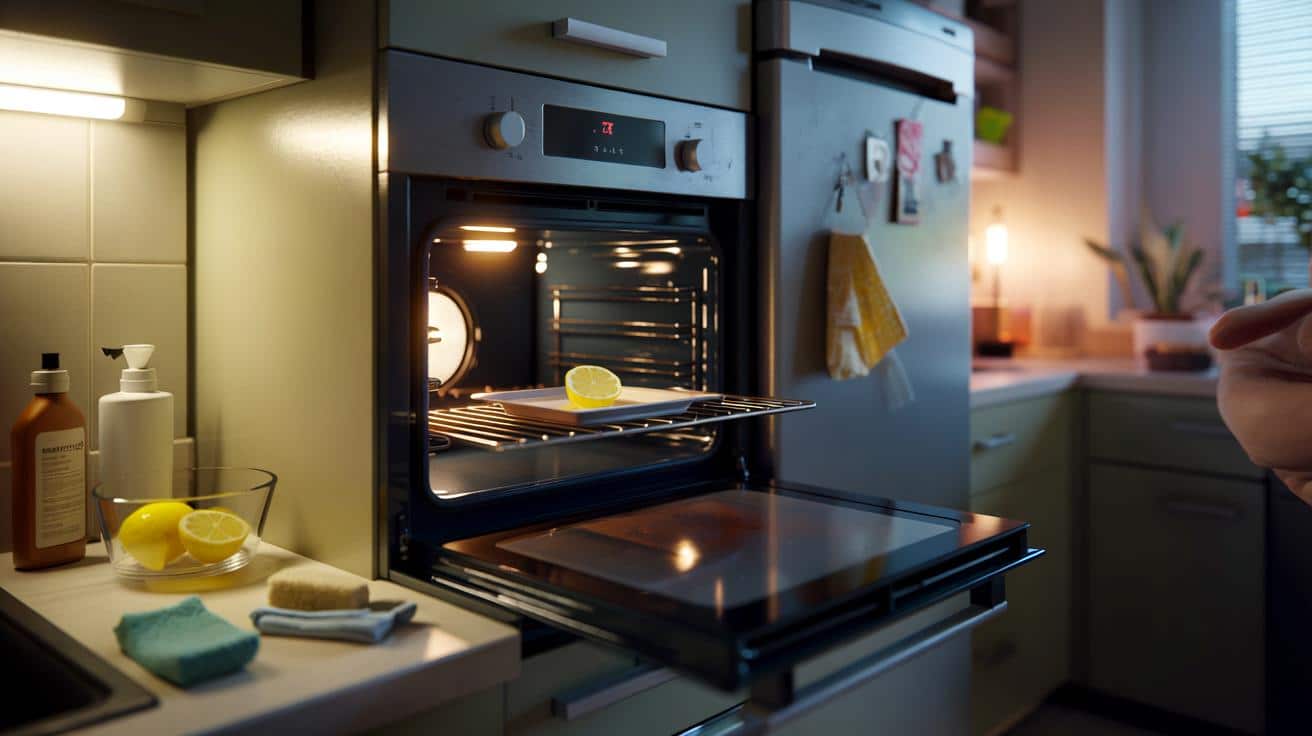
The rumor usually slips into your kitchen on a Tuesday night, somewhere between reheating leftovers and rinsing the cutting board. Someone on TikTok swears that if you place a slice of lemon in your cold oven before bed, you’ll wake up to a fresher, cleaner, almost “reset” kitchen. Another voice, this time on a Facebook group, shouts back that it’s reckless, useless, maybe even dangerous.
You pause, lemon in hand, door of the oven half open, suddenly aware you’re caught between two internet realities.
One tiny citrus slice, and a whole debate about what we do to feel in control at home.
Why a lonely lemon slice in the oven suddenly became “a thing”
The scene is strangely specific. A quiet kitchen, the oven off and cold, a single lemon slice on a tray like a prop in a minimalist movie. For some homemakers, this little ritual has turned into a kind of secret weapon: they say it neutralizes smells, softens grease, even “resets” the mood of the room.
On social networks, the idea circulates like a whispered recipe: simple, cheap, almost magical. And very photogenic.
Scroll a bit on cleaning TikTok and you’ll find it. A young mom in leggings, camera propped against a cereal box, sliding a plate with two lemon rounds into her oven before turning off the kitchen lights. The next clip: morning light, a quick wipe with a sponge, and her voice-over declaring the oven “fresh, degreased and detoxed”.
The video hits millions of views. In the comments, dozens of people swear they tried it once and “could never go back”, while others post confused questions about burns, acid on enamel, and whether this is just another chore disguised as a hack.
Behind the aesthetic videos sits a more down‑to‑earth explanation. Lemon contains citric acid and essential oils that can help loosen light grease and freshen smells. Trapped in a closed space, like an oven, that vapor can cling to grime and make it easier to wipe later.
Yet an unheated, completely cold oven won’t do much with a single slice. There’s no steam, no released oils, just a drying piece of fruit. The internet, as usual, compresses different methods into one viral “trick” and starts promising miracles.
How the lemon-in-the-oven trick is actually supposed to work
The version cleaning experts recognize looks a bit different from the viral “cold oven” image. It usually starts with a bowl or pan of water, a few thick lemon slices floating on top, and an oven set to low or medium heat for 20–30 minutes. That gentle warmth releases citrus steam, which can soften some baked-on residue and cut stubborn cooking odors.
Only after switching the oven off and letting it cool slightly does the wiping part begin.
➡️ One sock is enough: the grandma trick to clean your blinds like new without effort
➡️ How a drop of washing‑up liquid in the toilet can have a surprisingly big effect
➡️ 3,000 liters of hot water a day: Tinkerer needs no electricity, oil or gas
Where things get messy is in the shortcuts. A lot of people hear “lemon cleans ovens” and skip straight to tossing a slice onto a rack in a completely cold appliance, expecting a self-cleaning miracle overnight. Then they wake up to… the exact same oven.
Some try to compensate by cranking up the heat too high, or leaving the lemon in for hours while they forget about it. That’s when the line between “gentle natural cleaning” and “dried, scorched citrus stuck to metal” gets crossed, and the method suddenly feels like a scam.
There’s another layer: safety and expectations. Gas ovens need proper ventilation, electrical ones don’t love forgotten dishes, and acidic juices can stain or dull some finishes if you go wild. *A lemon is not a magic wand; it’s just a helpful tool with limits.*
So when one group online gushes about how a lemon slice “transformed” their kitchen, they’re often talking about a whole routine: a wipe‑down, a quick steam, a reset of habits. The myth is born when we pretend the lemon alone did all the work.
Between harmless ritual and risky nonsense: where experts draw the line
If you’re curious to try a realistic version of the trick, think less “cold, lonely slice” and more “mini steam spa”. Fill an oven‑safe dish with water, add a couple of lemon halves or thick slices, and set the oven to around 120–150°C (250–300°F) for 20 minutes. Turn it off, crack the door slightly, and let it cool until it’s warm but comfortable to approach.
Then, and only then, grab a cloth or sponge and gently wipe the softened grime.
The emotion behind this routine is easy to understand. We’ve all been there, that moment when the kitchen feels like it’s winning the battle and you just want one small, symbolic action that says: “I’m back in control.” The lemon-in-the-oven move fits that mood: it’s simple, it smells clean, and it looks oddly satisfying.
The common mistake is expecting it to rescue a decade-old, never-scrubbed oven door or burned cheese fossilized on the rack. Let’s be honest: nobody really does this every single day.
Done wrong, the trend slides into real risk. People have reported letting lemons sit on bare metal for hours, only to find pitted spots, discoloration, or sticky residue that’s actually harder to clean. Others forget dishes in the oven, preheat later, and create smoke or worse.
“Natural doesn’t mean harmless, and viral doesn’t mean verified,” warns a home economist I spoke to. “Lemon can help with fresh stains and smells, but it won’t replace proper cleaning or basic oven safety.”
- Never leave random dishes in the oven long‑term – Forgotten items plus high heat can warp, crack, or burn.
- Use moderate heat and time – Gentle steam works better than blasting at maximum temperature.
- Protect delicate finishes – Avoid scrubbing acidic juice into damaged enamel or already chipped surfaces.
- Combine lemon with real cleaning habits – A quick wipe while the oven is still slightly warm does more than any “hack”.
- Trust your nose and common sense – If it smells off or looks risky, skip the trick and reach for safer methods.
Why this tiny citrus gesture divides homemakers so deeply
Beneath the talk of acid, enamel, and burnt rinds lies something quieter: the way small rituals make us feel about our homes. For some, placing a lemon slice in a cold oven at night is similar to setting out fresh flowers or lighting a candle. Does it deep‑clean the appliance? Not really. Does it give the impression of a cared‑for space and a “next day” reset? Often, yes.
For others, this same gesture feels like one more task dressed up as magic, a way the internet makes us feel behind if our oven doesn’t smell like citrus at dawn.
The truth probably sits between these two poles. A lemon in the oven will not transform a neglected kitchen into a showroom. It won’t erase the need for real scrubbing, safe products, or honest maintenance.
But if a small, almost ceremonial step gets you to open the oven more often, notice stains earlier, and clean them while they’re still fresh, it can quietly change your relationship with that forgotten corner of your home.
Some homemakers will always call the trick a dangerous myth and move on to tried‑and‑tested cleaners. Others will keep their discreet nighttime lemon slice, not because they fully believe in its power, but because they like what it symbolizes at the end of a chaotic day.
Between those two attitudes, there’s room for a simple question: not “Does this hack work 100%?” but “Does this little habit genuinely help me live better in my kitchen?” The answer, as often with domestic life, is more personal than any viral tutorial admits.
| Key point | Detail | Value for the reader |
|---|---|---|
| Reality behind the hack | Lemon steam can loosen light grime and freshen smells, but a cold slice alone does almost nothing. | Adjusts expectations and avoids disappointment or overreliance on clickbait tricks. |
| Safe method | Use a dish of water and lemon at low heat for a short time, then wipe while the oven is warm. | Offers a practical, low‑risk way to test the idea at home. |
| Emotional side | Small rituals like this can make people feel more in control of their space. | Helps readers decide if the habit serves them emotionally, not just technically. |
FAQ:
- Question 1Does putting a lemon slice in a completely cold oven actually clean it?
- Question 2Is it safe to heat lemon in the oven for cleaning purposes?
- Question 3Can lemon damage the oven’s enamel or metal parts?
- Question 4Does the lemon trick help with strong cooking odors, like fish or burnt food?
- Question 5What’s a simple alternative if I don’t want to try the lemon-in-the-oven hack at all?