Dusty blinds, greasy slats, no time for complicated gadgets… yet a low‑tech trick hides in nearly every drawer.
Across social media and in old-fashioned homes alike, a simple sock has quietly become the unlikely star of blind cleaning, turning a job most people avoid into a task you can finish in minutes, without special sprays or tools.
The sock trick that turns blind cleaning into a quick job
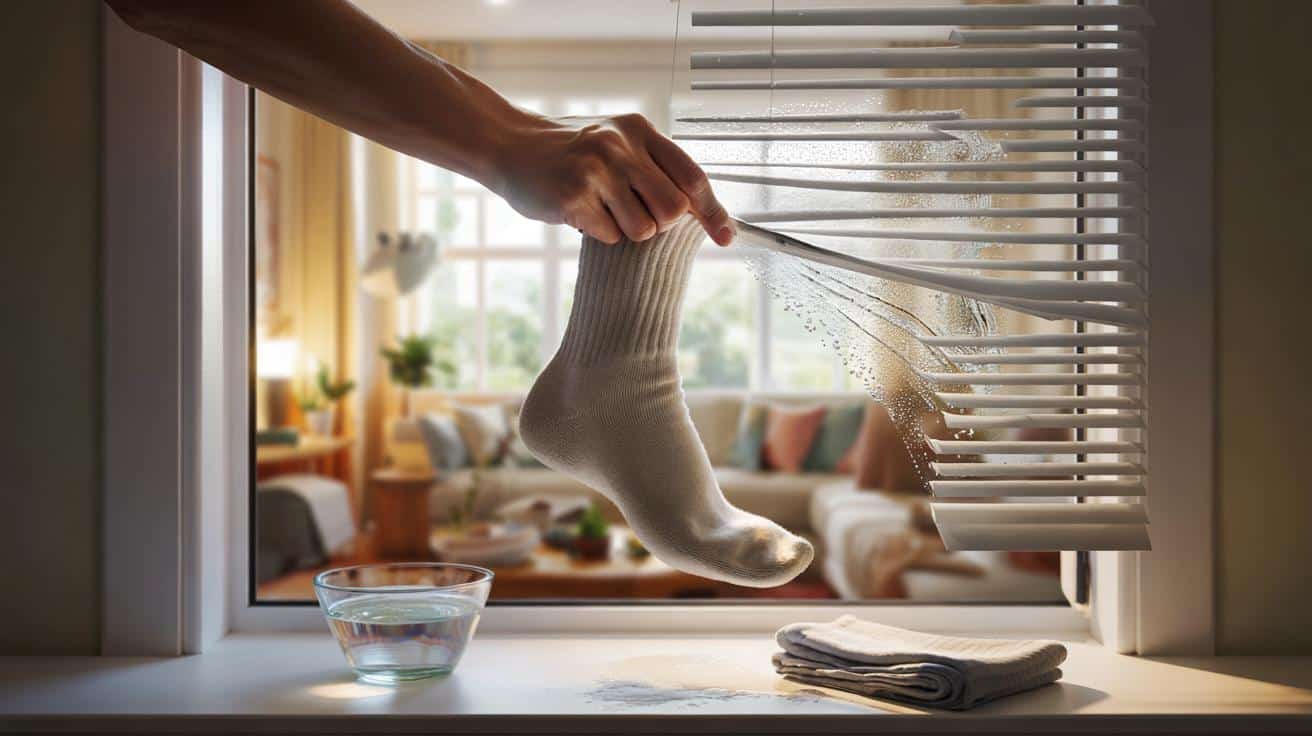
The idea sounds almost silly: you put a sock on your hand and run it along the slats of your blinds. That’s it. No expensive tool, no fragile feather duster.
What makes this so effective is the contact between your fingers and each slat. Your hand feels where dust or grease has built up, and you instinctively press a little harder or adjust your grip.
By turning a sock into a glove, you gain full control over the pressure, angle and movement on every slat.
Here is the basic method, step by step:
- Choose a clean old sock, preferably thick cotton or, better still, microfibre.
- Slip it over your hand like a mitten.
- Prepare a mild cleaning solution in a bowl (water + gentle soap, or water + white vinegar).
- Dip your socked hand quickly, then wring the fabric thoroughly until just damp.
- Place a slat between thumb and fingers, pinch gently, and slide along its full length.
- Rinse or change the sock once it looks grey or clogged with dust.
The movement is almost the same as wiping a shelf, but the sock lets you clean both sides of a slat at once. You can also bend your fingers to get into corners and awkward areas near cords or window frames.
Why the right fabric matters
Not all socks work in the same way. Your old sports sock will do the job, but certain fabrics capture dust more efficiently.
Microfibre is often the winner: its tiny fibres create a light static effect that traps dust instead of pushing it around.
Here is how common options compare:
➡️ 3,000 liters of hot water a day: Tinkerer needs no electricity, oil or gas
➡️ Hair professionals say this cut is perfect for hair that gets flat by midday
➡️ According to psychology, the way you react to criticism says a lot about your self-esteem
| Type of sock | Best use | Pros | Cons |
|---|---|---|---|
| Cotton sock | Routine cleaning, light dust | Easy to find, washable, soft on surfaces | Pushes some dust into the air, less effective on grease |
| Microfibre sock or glove | Thorough dusting, allergen reduction | Grabs fine particles, works well dry or slightly damp | Can feel too “grippy” on rough wood, needs proper washing |
| Synthetic thin sock | Quick touch-ups | Glides easily, dries fast | Catches less dust, slips on greasy spots |
Whichever you choose, avoid socks with large decorative beads or thick seams that could scratch delicate finishes, especially on wooden blinds or painted metal.
Simple homemade cleaning solutions
The liquid you use with the sock matters almost as much as the technique. Yet there is no need for heavy-duty chemicals.
For everyday dust and light grime
For most rooms, a gentle mix is plenty:
- 1 bowl of lukewarm water
- 3–4 drops of mild washing-up liquid or black soap
This loosens dust and fingerprints without attacking the material or leaving a sticky film. Swirl your hand in the bowl, squeeze the sock extremely well, then start on the blinds.
For kitchen blinds and built-up grease
In a kitchen, blinds collect a mix of dust and microscopic fat droplets. The slats can feel slightly sticky to the touch.
A 50/50 mix of white vinegar and water cuts through grease and has a mild disinfecting effect.
The acetic acid in vinegar helps break down oily residues and many microbes on the surface. Always rinse your sock in clean water afterwards and wring it again before continuing, so you do not leave strong vinegar odours on every window.
Whichever recipe you use, the crucial habit is restraint with moisture. A dripping sock can seep into cords, mechanisms and wood, causing stains or warping.
Adapting the sock trick to different blind materials
Not all blinds react the same way to water and cleaning agents. Matching your approach to the material prevents costly damage.
PVC or vinyl blinds
These are the easiest to live with. They tolerate gentle soapy water or the vinegar mixture well.
- Use a damp, not wet, sock soaked in your chosen solution.
- Wipe each slat, then run a dry cloth or dry sock over them to avoid water spots.
- For very dirty areas, repeat once rather than scrubbing aggressively.
PVC does not like harsh scouring powders or abrasive sponges, which can leave a dull film or fine scratches that trap more dirt.
Aluminium blinds
Aluminium blinds generally cope well with moisture and appreciate the vinegar–water mix, which can revive their shine.
Here again, focus on:
- Gentle pressure, to avoid bending thin slats.
- Immediate drying with a soft towel to prevent water marks, especially in hard-water areas.
If you notice chalky white spots after drying, that is usually limescale from tap water. Wiping again with a slightly vinegar‑damp sock, then drying, usually removes it.
Wooden blinds
Wood is the one case where too much enthusiasm with a wet sock can go very wrong.
Wooden blinds should be cleaned mainly dry; water can cause swelling, warping and stains in the grain.
Start with a completely dry cotton or microfibre sock and dust each slat thoroughly. If you find stubborn marks:
- Dampen a corner of the sock very lightly.
- Spot-clean the stain in small circular motions.
- Immediately follow with a dry cloth or dry part of the sock to remove any residual moisture.
Avoid strong degreasers, ammonia-based glass cleaners and abrasive pastes on wood. If your blinds are oiled rather than varnished, even mild soap can strip the finish, so a nearly dry method works best.
How often should you use the sock on your blinds?
The sock trick works particularly well as a short, regular habit rather than a once-a-year deep clean.
- Living rooms and bedrooms: every 2–3 weeks for a quick pass.
- Kitchens: once a week, or more if you cook frequently without strong extraction.
- Bathrooms: monthly, to remove steam‑borne dust and any early signs of mould.
Frequent light cleaning keeps dust from hardening with moisture and grease. It also reduces allergens such as pollen and mite residues, which tend to settle on horizontal surfaces like blind slats.
Small risks and how to avoid them
Although this is a low-tech, low-risk technique, a few missteps can cause problems.
- Too much water: may damage wood, rust unprotected metal parts or stain fabrics nearby.
- Excess force: can bend aluminium slats or knock blinds out of alignment.
- Dirty or coloured sock: can transfer dye or old grime onto pale blinds.
- Ignoring cords and mechanisms: built-up dust here shortens the life of the blind.
The fix is simple: work gently, use a light-coloured sock you do not mind staining, and keep a dry cloth nearby for quick drying and polishing.
Extra tips to make the trick even more effective
Some people adapt the technique further. For wide windows, they slip a sock over each hand to clean faster. Others keep a dedicated microfibre “blind sock” in the laundry basket so it is always ready for a weekend refresh.
You can also combine this method with other quick tasks: run the sock over the window sill, radiator tops or the frame while you are there. That way, one bowl of cleaning solution and one sock cover several dusty hotspots in a room.
If you struggle with allergies, using the sock dry first to pick up loose dust, then going back with a slightly damp sock, reduces airborne particles. The damp second pass traps finer dust instead of letting it float around the room.
For renters or anyone moving into a new flat, the sock tactic works well during the first walkthrough clean: blinds are often overlooked by previous occupants, yet a few slow passes with your makeshift glove can instantly brighten a room and let in more light.